

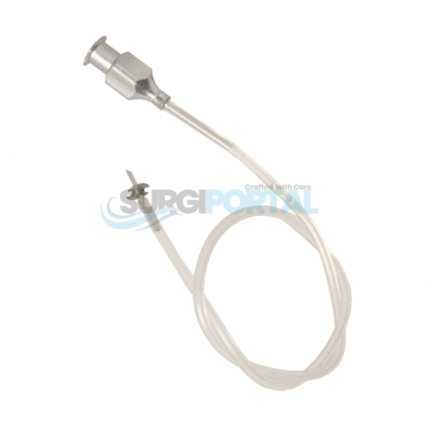

Trocar Cannula System
Original price was: $110.00.$80.00Current price is: $80.00.
Trocar Cannula System is a precision ophthalmic access device designed to create and maintain self-sealing entry ports during vitreoretinal surgery. Consisting of a sharp trocar obturator and a matching cannula sleeve, this reusable or single-use system provides secure transconjunctival access, stable instrument entry, and efficient fluid management during posterior segment procedures.
Shipping Policy
At SurgiPortal, we ensure fast, reliable, and secure shipping of surgical instruments worldwide.
Order Processing
All orders are processed within 5–8 working days, with multiple delivery options to suit your needs:
- Standard Shipping: 7–10 business days
- Express Shipping: 4–6 business days
- Priority Delivery: 2–4 business days (available in select regions)
Delivery Partners
We collaborate with trusted global carriers such as DHL, FedEx, and UPS. Additional options include registered airmail and bulk freight solutions for clinics and hospitals.
Packing Standards
Each order is carefully packed using sterile, damage-resistant materials to maintain the highest hygiene and safety standards during transit.
Order Tracking
Upon shipment, customers receive a tracking number to monitor their order in real-time.
Reliable Delivery
Our certified delivery network ensures timely arrival of your surgical supplies in excellent condition.
With SurgiPortal’s professional medical logistics, you can count on efficient delivery and superior service—every step of the way.
Related products

Backflush Handpiece

End Gripping Forceps
Infusion Cannula

Laser Probe for Vitrectomy
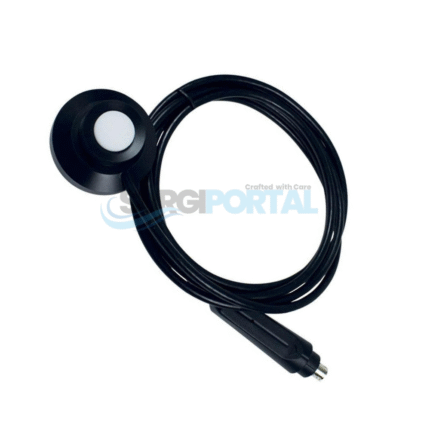
Light Pipe Illumination Probe

Membrane Peeling Forceps

Soft Tip Cannula

Vitrectomy Cutter Vitrector
The Vitrectomy Cutter (Vitrector) is a high-precision ophthalmic instrument used in pars plana vitrectomy for cutting and aspirating the vitreous humor. Featuring a high-speed guillotine mechanism, it ensures smooth vitreous removal with minimal traction and excellent surgical control.
Professional Vitrectomy Cutter for Advanced Vitreoretinal Surgery
The Vitrectomy Cutter, also known as a Vitrector, is a core instrument in modern vitreoretinal surgery used for the controlled cutting and removal of vitreous gel during pars plana vitrectomy procedures. It plays a critical role in treating retinal disorders by enabling safe and efficient vitreous removal while maintaining intraocular stability.
Engineered with a high-speed guillotine cutting system, the vitrector delivers precise cutting action with minimal traction on surrounding retinal structures. This significantly reduces the risk of retinal tears and improves overall surgical safety.
Designed for compatibility with pneumatic and electric drive systems, the instrument supports modern micro-incision vitreoretinal surgery techniques and is available in multiple gauge sizes for different surgical requirements.
Key Features
- High-speed guillotine cutting mechanism for precision vitreous removal
- Cutting speed up to 10,000 cuts per minute (CPM)
- Available in multiple gauges: 20G, 23G, 25G, 27G
- Compatible with pneumatic and electric drive systems
- Smooth aspiration flow for efficient vitreous removal
- Minimal retinal traction for enhanced surgical safety
- Designed for micro-incision vitreoretinal surgery
- High-performance surgical-grade construction
- Stable fluid dynamics during continuous cutting
- Ideal for advanced ophthalmic surgical procedures
Applications
The Vitrectomy Cutter is commonly used for:
- Pars Plana Vitrectomy (PPV)
- Retinal Detachment Surgery
- Macular Hole Repair
- Diabetic Retinopathy Surgery
- Vitreous Hemorrhage Removal
- Posterior Segment Eye Surgery
Product Specifications
| Product Name | Vitrectomy Cutter (Vitrector) |
|---|---|
| Instrument Type | Ophthalmic Vitreoretinal Cutter |
| Cutting Mechanism | Guillotine System |
| Cutting Speed | Up to 10,000 CPM |
| Gauge Options | 20G / 23G / 25G / 27G |
| Drive Compatibility | Pneumatic / Electric |
| Function | Vitreous Cutting & Aspiration |
| Application | Vitreoretinal Surgery |
Benefits of Vitrectomy Cutter
High-Speed Precision
Ensures rapid and controlled vitreous removal.
Minimal Retinal Traction
Reduces risk of intraoperative retinal damage.
Versatile Gauge Options
Suitable for multiple surgical approaches and incision sizes.
Advanced Compatibility
Works with modern pneumatic and electric vitrectomy systems.
Improved Surgical Efficiency
Enhances fluid control and reduces operative time.
Frequently Asked Questions (FAQs)
What is a Vitrectomy Cutter used for?
It is used to cut and remove vitreous gel during vitreoretinal surgery.
What is the maximum cutting speed?
It can operate up to 10,000 cuts per minute (CPM).
What gauge sizes are available?
It is available in 20G, 23G, 25G, and 27G sizes.
Is it compatible with modern machines?
Yes, it is compatible with pneumatic and electric drive systems.
Does it reduce retinal traction?
Yes, it is designed to minimize traction on retinal tissues.
What surgeries is it used in?
It is used in vitrectomy, retinal detachment, and diabetic eye surgeries.

Reviews
There are no reviews yet.